Conversation and collaboration: bringing together champions of nature-based solutions in Sofia, Bulgaria
Green and blue spaces are valuable resources for cities, both in terms of quality of life for citizens but also in terms of resilience in the face of climate volatility. These spaces play a part in addressing common urban problems from heat islands, to dirty air as well as to more socially orientated issues such as health and wellbeing.
Why co-evaluation?
Project GreenEsteem recognises that while stakeholders in urban environments often recognise the value of nature based solutions (NBS), there are often a lack of opportunities for collaboration and knowledge sharing across sectors. This is why co-evaluation of existing practice with a range of stakeholders from academia, business, civil society and the public sector, is a key pillar of the project.
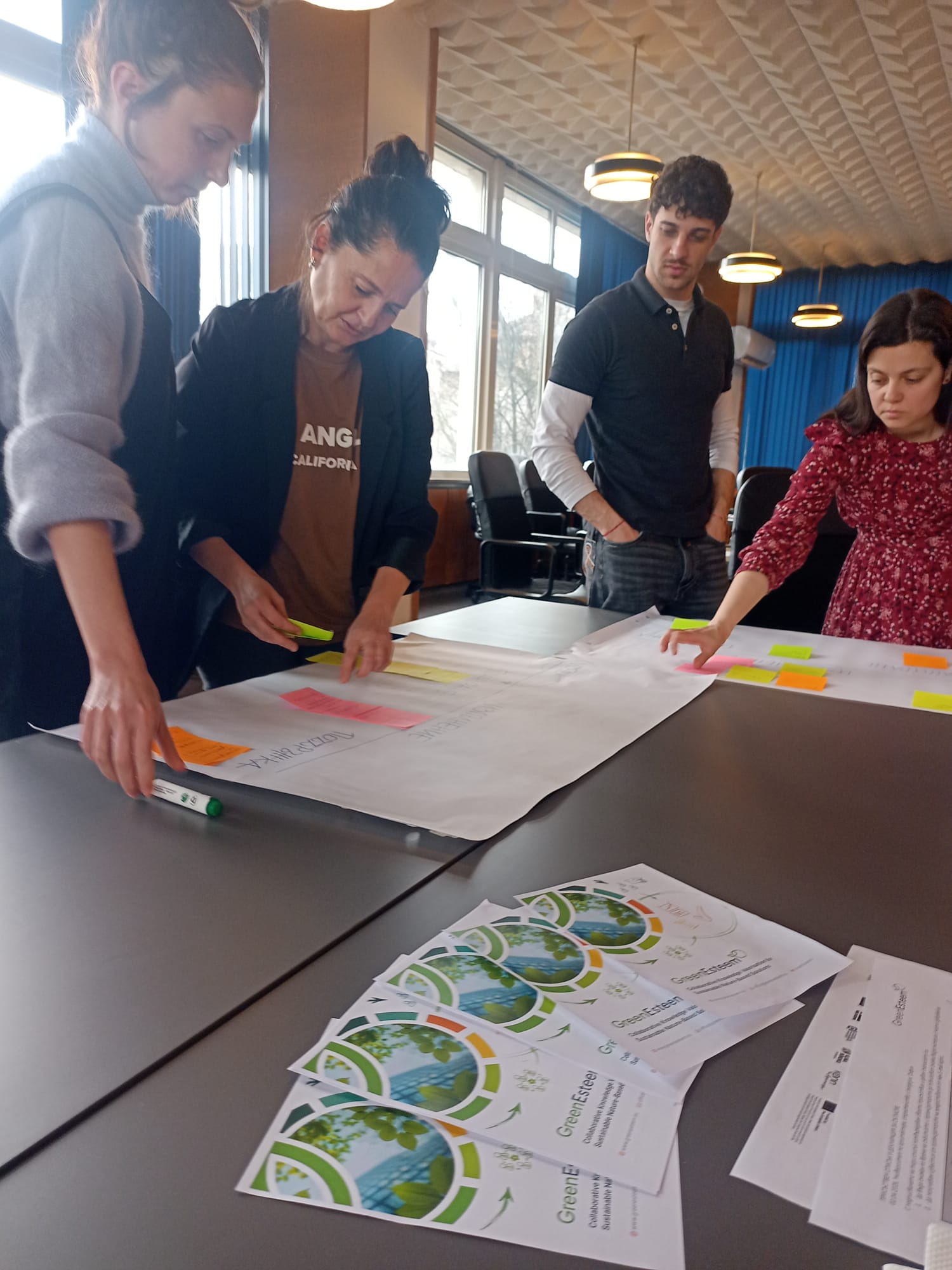
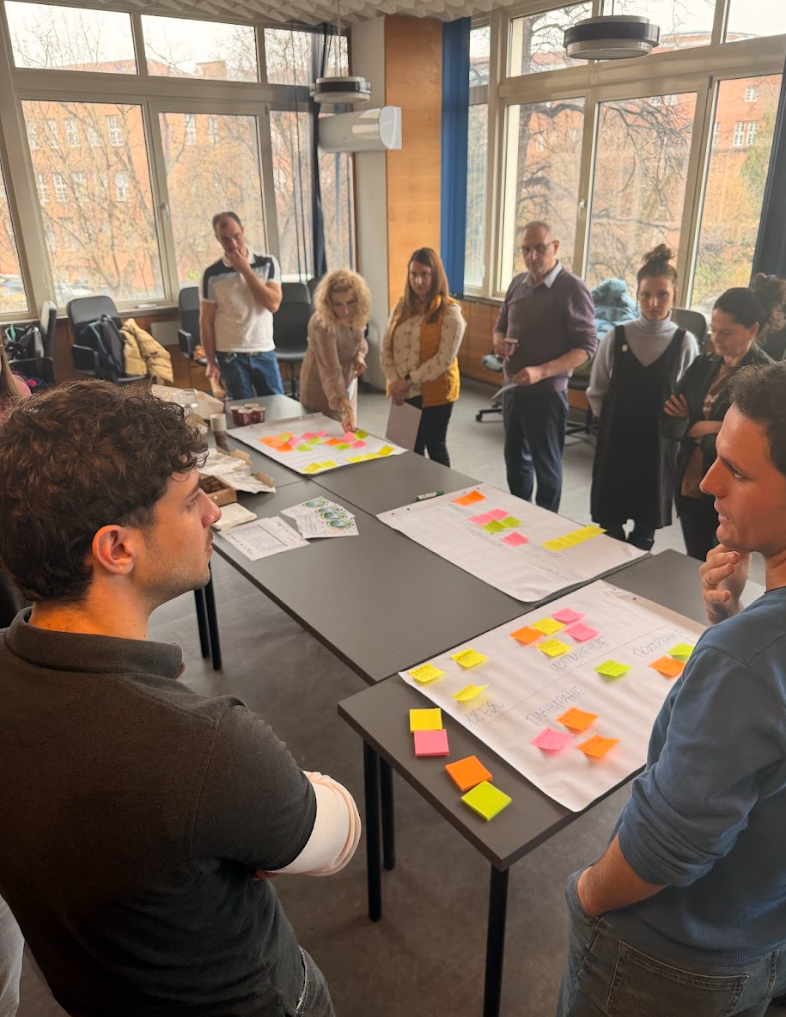
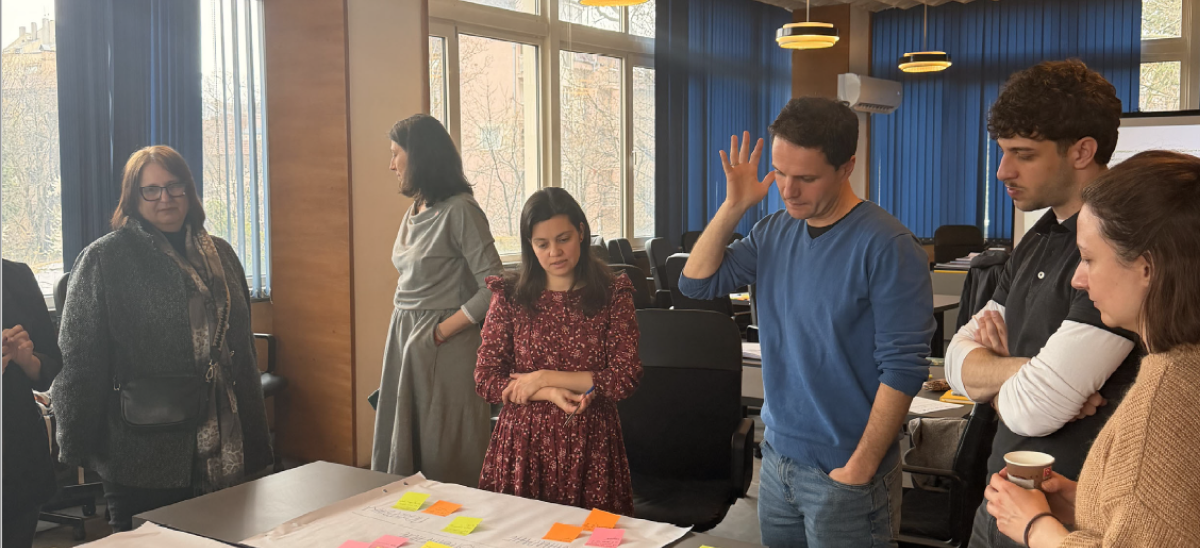
On the 2nd April and 20th May, co-evaluation workshops were held in Sofia, Bulgaria. These workshops created a space where people could connect and explore opportunities to work together as well as focusing on participants’ experiences of knowledge sharing and typical barriers, drivers and needs in nature based projects.
Barriers, drivers and project needs in the Bulgarian context
With 17 participants with a range of experience, conversation was facilitated through a range of methods including group discussions, reflection and knowledge-journey mapping. Knowledge valorisation principles were at the heart of discussions and participants rated connecting knowledge with practice as their top priority. A particular concern raised when discussing barriers and blockers, was the lack of access to appropriate data or information. While international sources and especially EU frameworks were highlighted as a positive driver, local examples and access to information about projects in the Bulgarian context were seen as a missing piece in development of good practice in NBS.
The lack of appropriate regulations and frameworks to support NBS were also highlighted, and where regulations existed, participants suggested that its implementation was often patchy. This contributes to the lack of motivation from public sector institutions to support such projects, with participants stating that innovation and effort were generally not appreciated, and that citizen initiatives often struggled when trying to handover responsibility or to collaborate with institutional partners. Key to discussions was that while instances of good practice do exist in the public sector, NBS is largely championed by civil society and academic institutions.
Other key themes from the workshop discussions included the need for consistent approaches to reporting on NBS projects in Bulgaria, to ensure that learnings and developments are shared across the country with relevant stakeholders; the lack of structural support for NBS which leads to an over-reliance on personal motivation of individuals, and a lack of clarity around communication strategies and their effectiveness.
The insights gathered in the co-evaluation workshops will be utilised in the development of training modules and inform the next steps of the project.