

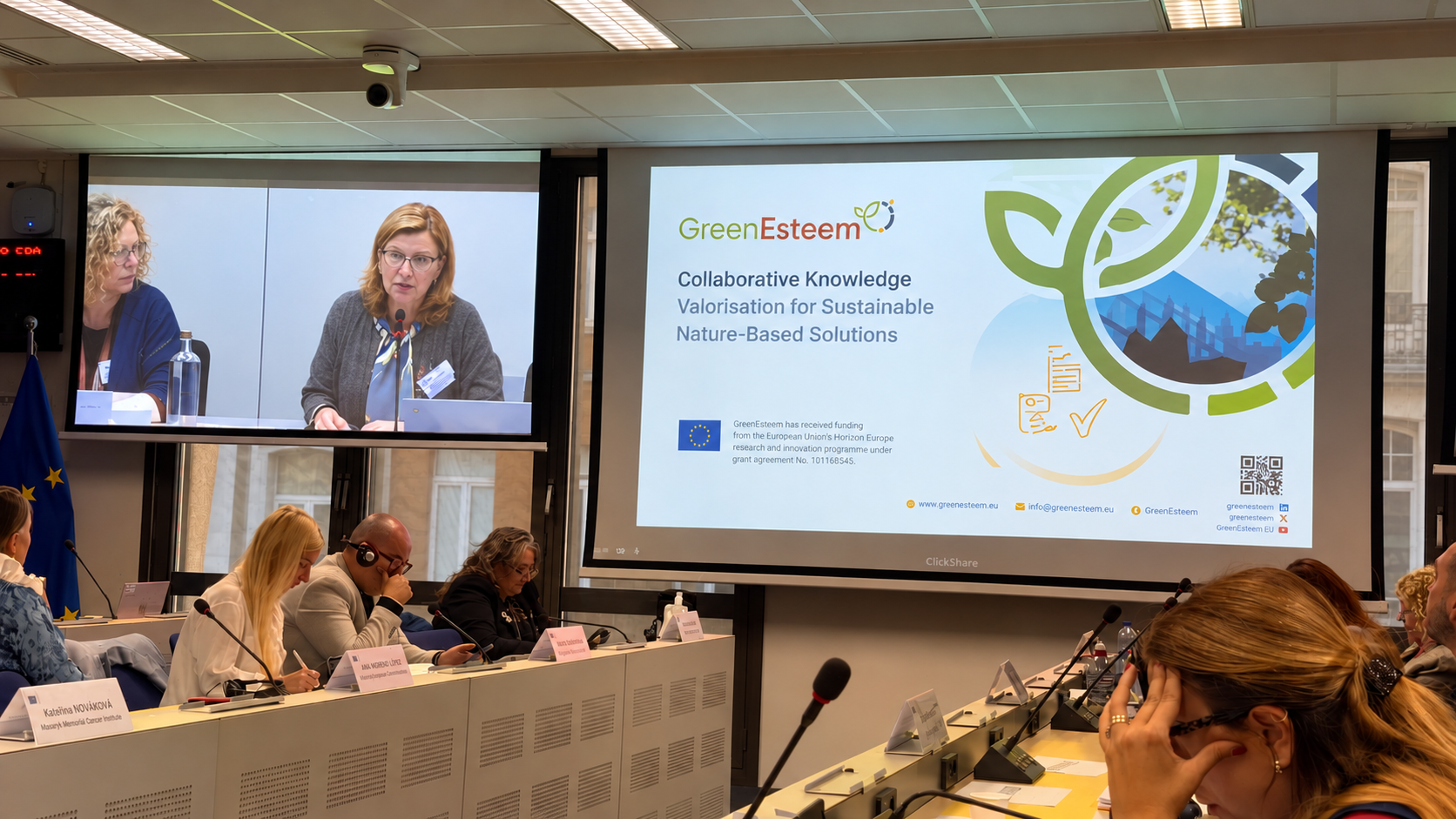
Bridging Research and Policy: GreenEsteem at the EU Knowledge Valorisation Event
On 8 October 2026, the GreenEsteem project participated in “Knowledge Valorisation in Action: from Results to Policy”, an event organised by the European Research Executive Agency (REA) in cooperation with the European Commission’s Directorate-General for Research and Innovation (DG RTD).
The event brought together representatives of Horizon Europe projects, researchers, practitioners and EU policymakers to exchange experiences and explore how research results can generate tangible benefits for society, the economy and public policy.
From Research Results to Policy Impact
The main objective of the event was to showcase the experiences and results of Horizon Europe projects testing innovative approaches to knowledge valorisation – turning research-based knowledge into practical applications and societal value.
Particular attention was given to identifying lessons from these projects that could inform European policies and future initiatives supporting knowledge valorisation.
The discussions focused on three interconnected themes:
- Bringing Research Results to Society – engaging citizens and stakeholders, integrating different forms of knowledge and ensuring that research outcomes address real societal needs.
- Bringing Research Results to the Market – strengthening pathways for translating research findings into innovation, business opportunities and practical applications.
- From Results to Policy – identifying transferable lessons from Horizon Europe projects that could support the development and improvement of European research and innovation policies.
The programme combined project presentations, panel discussions and exchanges between researchers, practitioners and policymakers, providing an opportunity to reflect on both successful approaches and persistent challenges in knowledge valorisation.
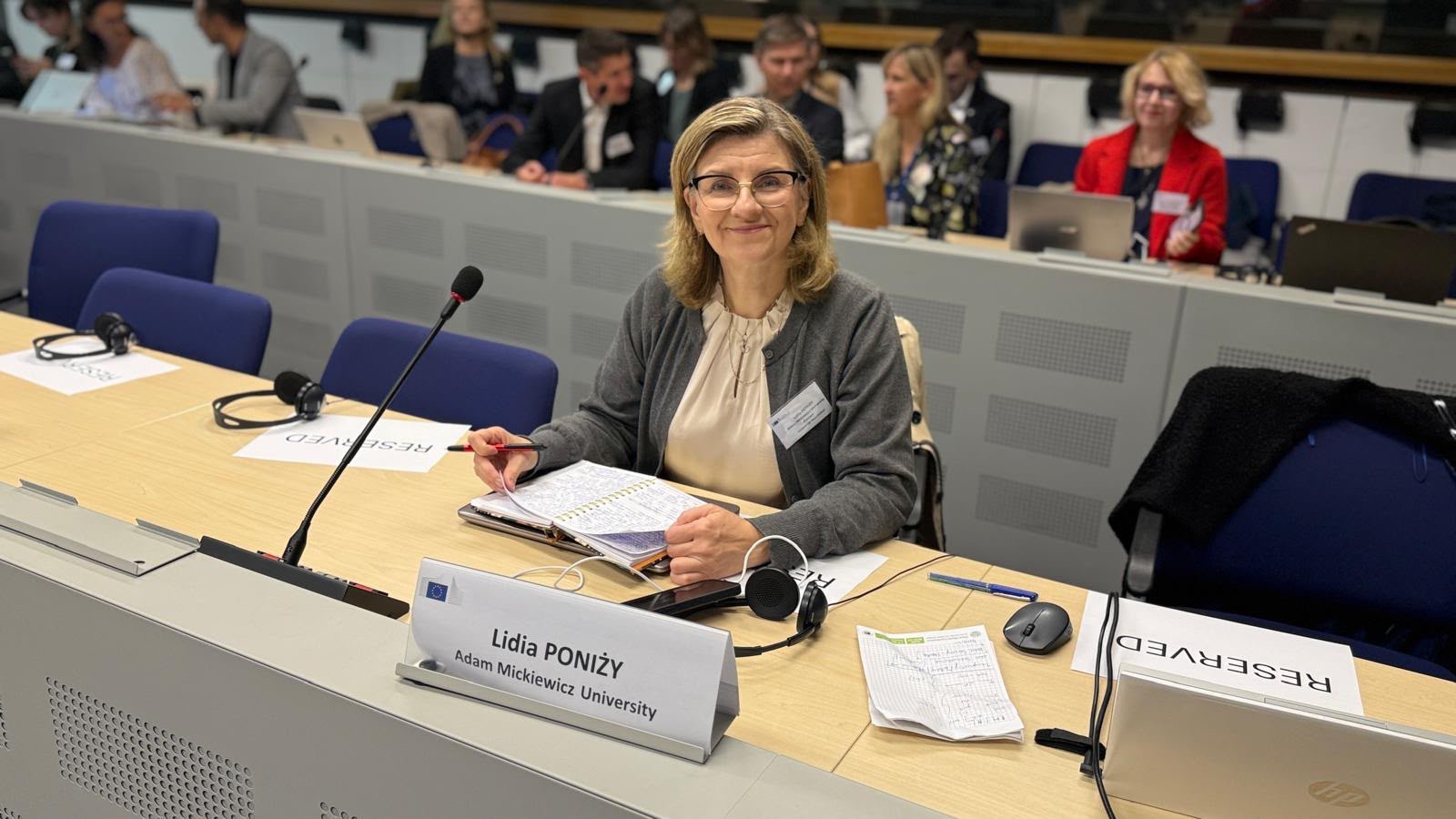
Lidia Poniży (Adam Mickiewicz University) representing the GreenEsteem project at the “Knowledge Valorisation in Action: from Results to Policy” event at the Albert Borschette Centre in Brussels. (Photo: AMU)
GreenEsteem’s Presentation: Translating EU Policies into Local Policies
GreenEsteem contributed to the session “Bringing Research Results to Society”, where Lidia Poniży delivered the presentation “From EU Principles to Evidence: Co-evaluating Knowledge Valorisation in an NBS Living Lab.”
Drawing on the project’s experiences in the Konin Living Lab in Poland, the presentation demonstrated how the EU Knowledge Valorisation Guiding Principles can be translated into practical, locally relevant co-evaluation methods.
A key methodological contribution of GreenEsteem is the translation of seven EU Guiding Principles into 15 accessible, practice-oriented questions, enabling local stakeholders to assess how knowledge is created, shared and used in the planning and implementation of nature-based solutions (NBS).
The co-evaluation process brought together scientific, professional and local knowledge, including residents’ experiences and perspectives, to identify strengths, barriers and opportunities for improving NBS implementation.
The presentation highlighted three emerging lessons:
- Integrating different forms of knowledge: Scientific and formal knowledge need to be better connected with local experience and knowledge generated by communities.
- Turning participation into meaningful influence: Stakeholder engagement should go beyond consultation, making it possible to trace how shared knowledge influences actual decisions.
- Ensuring long-term value: Sustainable NBS implementation requires clearly defined responsibilities, maintenance arrangements and long-term governance from the outset.
These findings suggest that co-evaluation can serve not only as a participatory learning tool within individual projects, but also as a potentially transferable approach for assessing knowledge valorisation in future programmes and policy initiatives.
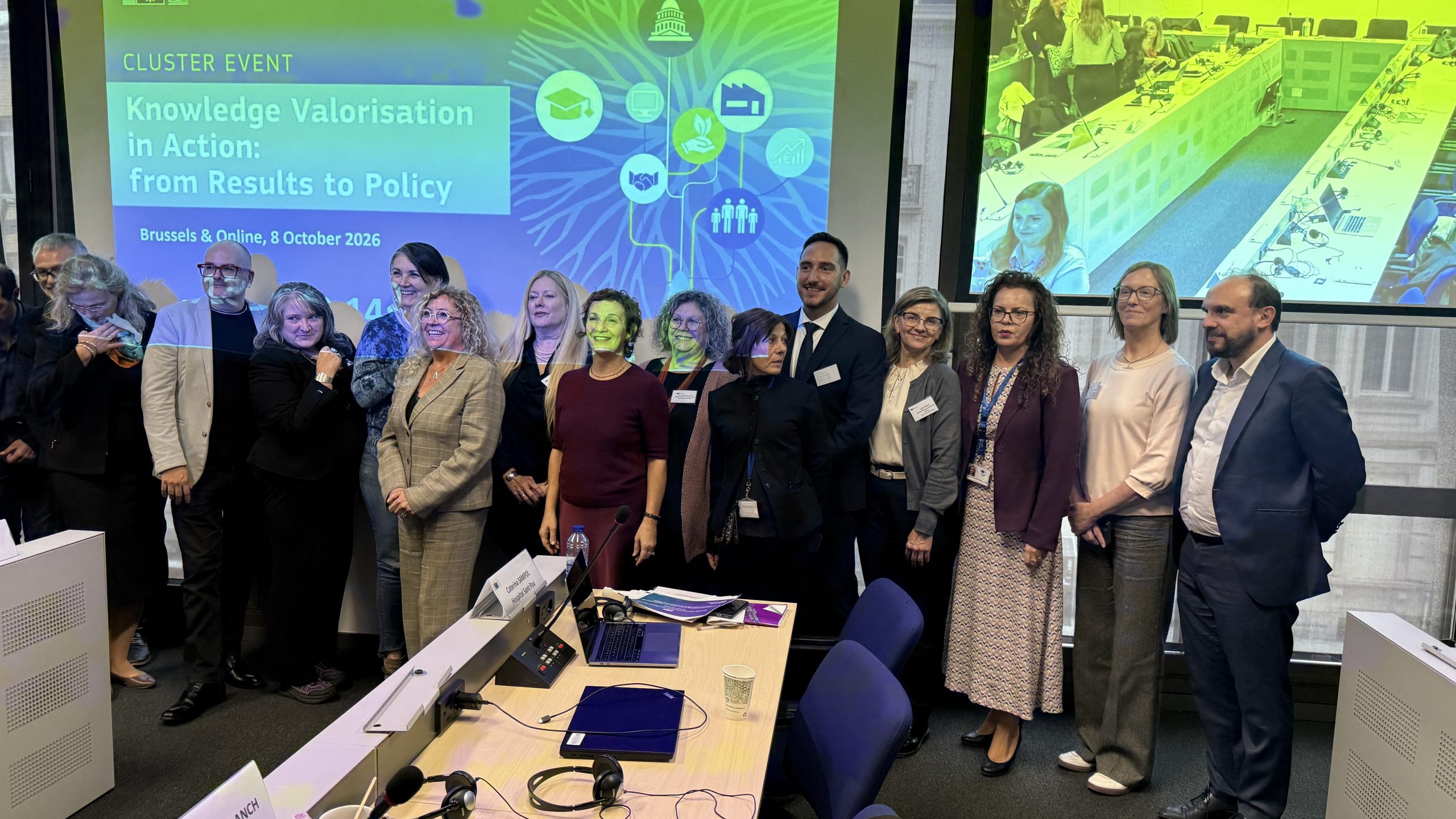
Speakers and project representatives gather at the “Knowledge Valorisation in Action: from Results to Policy” cluster event in Brussels on 8 October 2026. (Photo: AMU)
From Shared Knowledge to Lasting Impact
One of the central messages of GreenEsteem’s presentation was that knowledge valorisation should not be assessed only through project outputs, but also through how knowledge influences decisions and creates lasting value for communities.
The project’s next steps will further explore how knowledge generated through co-evaluation and co-design can inform local action plans, implementation pathways and long-term management of nature-based solutions.
In this way, GreenEsteem contributes to the broader European discussion on how to move from general knowledge valorisation principles towards practical approaches that connect research, society and policymaking.
GreenEsteem was represented at the event by Lidia Poniży and Katarzyna Fagiewicz from Adam Mickiewicz University, Poznań.
The event offered a valuable opportunity to exchange experiences with other Horizon Europe projects and reflect on how locally developed approaches can contribute to wider European learning and future policy development.
Watch the Event Recording
Missed the discussions or want to revisit the presentations? The European Commission has made the official recording of the event publicly available.
You can watch the full session, including the GreenEsteem project presentation on the Konin Living Lab, via the official webcast player of the European Commission.
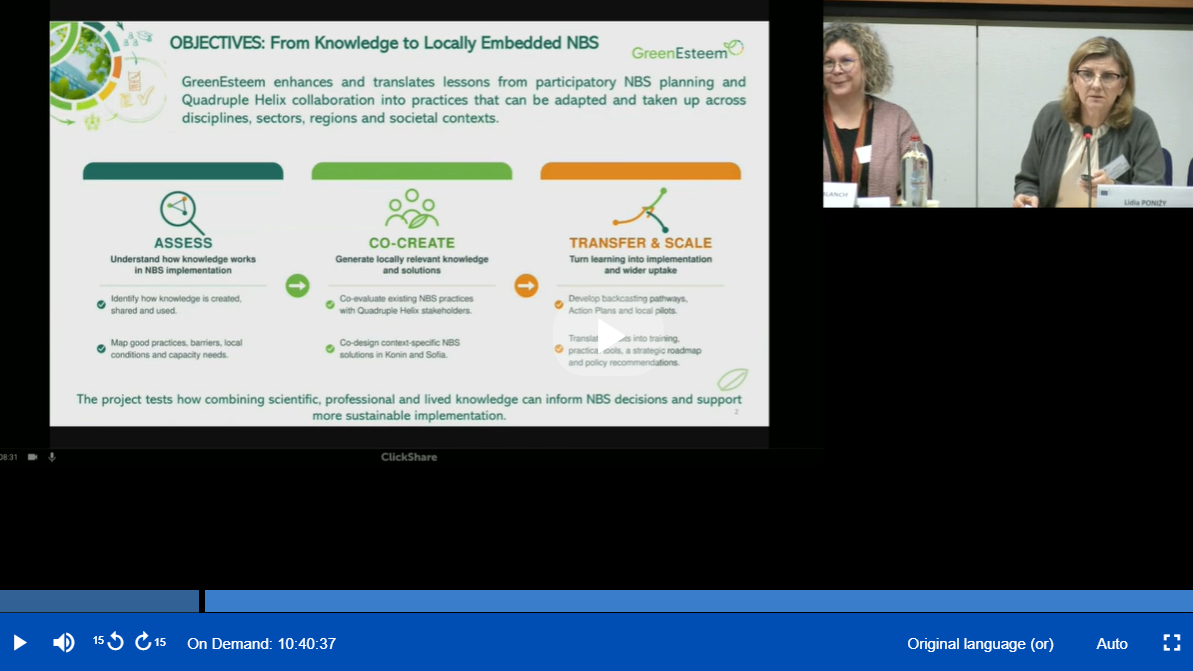
About the Co-Design Approach in Konin Living Lab
The transformation of Legionów Street, the project’s Living Lab in Konin, is part of a dedicated, three-phase co-design mission led by Adam Mickiewicz University. Throughout this process, diverse groups from citizens and local businesses to researchers and city officials work together to co-create actionable knowledge for Nature-Based Solutions (NBS). In the first phase, mapping tools help jointly identify neglected areas requiring intervention. The second phase uses immersive tools, like VR models, to co-design tailored NBS visions. Finally, the process entails “backcasting” workshops to define the exact steps and responsibilities needed to achieve these shared visions.
These efforts are grounded in the Konin Living Lab, which focuses specifically on post-industrial areas and modernist large housing estates in a city actively transitioning from coal mining toward climate neutrality. By evaluating past initiatives and co-designing new ones in real-life settings, the lab ensures that solutions are rooted in local realities while building shared knowledge for more resilient cities.
Learn more about these initiatives by visiting the Konin Living Lab page.
Author: AMU