GreenEsteem Convenes in Vienna to Review Mid-Project Progress and Future Milestones
The GreenEsteem consortium gathered in Austria’s capital to assess achievements from the past year, finalize upcoming pilot actions, and explore local urban cooling solutions.
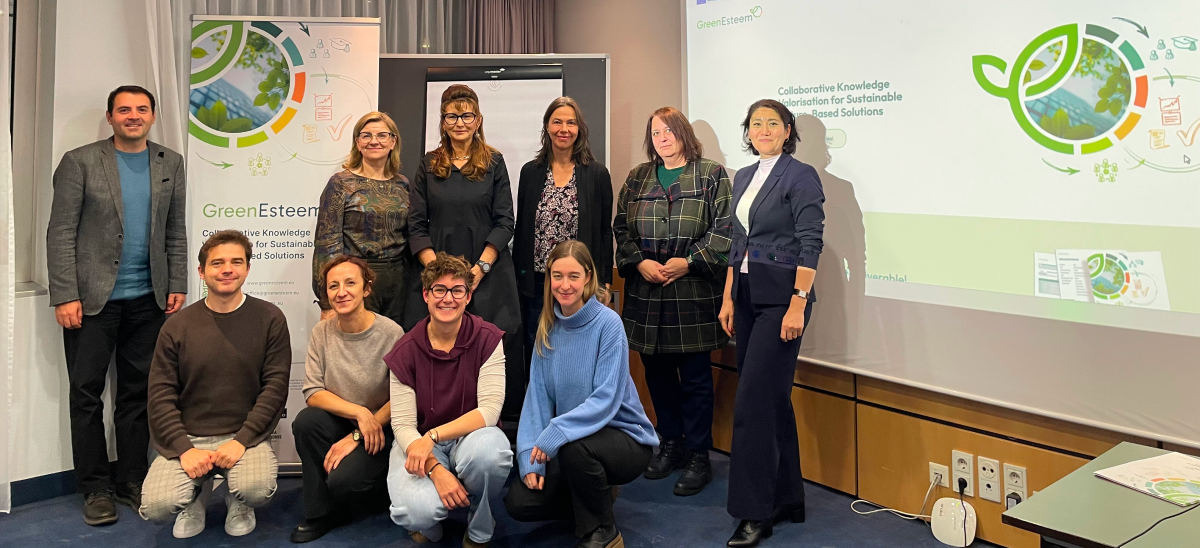
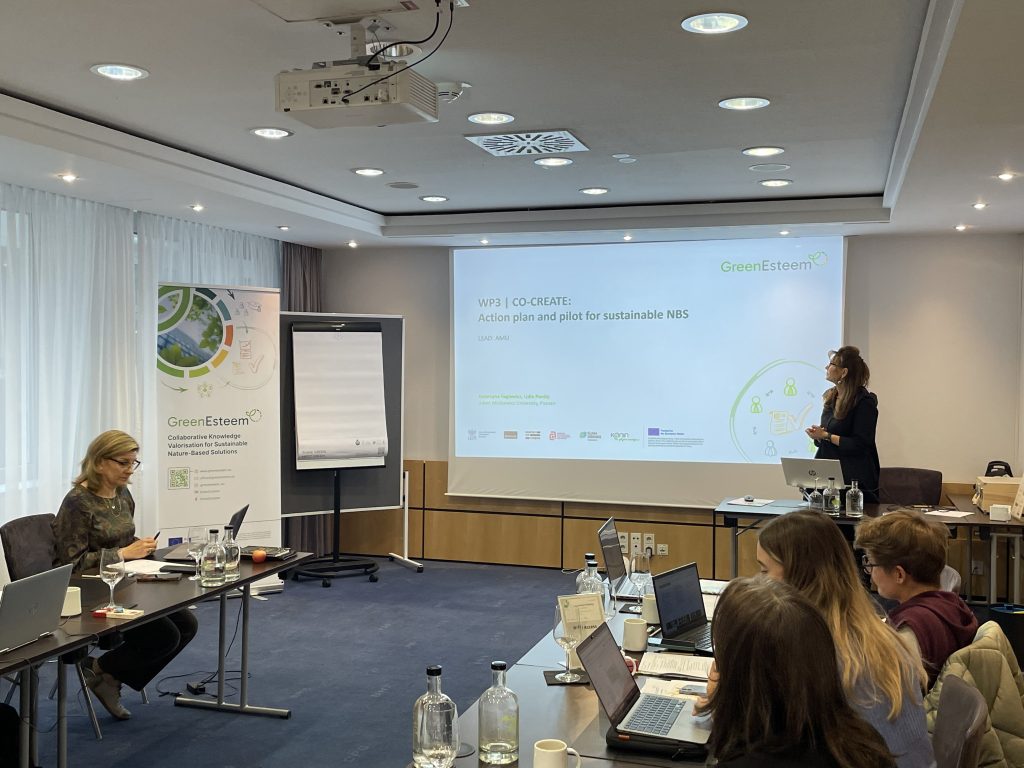
On November 3rd and 4th, 2026, the GreenEsteem partners from Adam Mickiewicz University (AMU), the University of Architecture, Civil Engineering and Geodesy (UACEG), Urban Policies Association (TEAM SOFIA), Climate Alliance Austria (CAA), SYNYO, and KONIN gathered in Vienna, Austria. The two-day consortium meeting hosted by SYNYO focused on reviewing the project’s mid-term progress, evaluating key milestones, and aligning on strategic next steps for sustainable Nature-Based Solutions (NBS).
Mid-Term Progress
To date, the project has assessed over 60 NBS best practices for urban living across partner countries to support Collaborative Knowledge Valorisation (CKV). The team has analyzed local contexts and developed a methodological framework for participatory approaches, alongside new training modules designed for knowledge transfer to identified Quadruple Helix stakeholder groups: local municipalities, academia, civil society, and the business sector.
Additionally, the project established dedicated advisory boards – Expert Support Groups in Austria, Bulgaria, and Poland to provide strategic oversight and local guidance.
These findings will soon be publicly available on the GreenEsteem website as official project deliverables: D2.1 NBS and CKV Assessment Report and D3.1 Co-Creation Report.
Looking Forward: GreenEsteem’s Path to Impact
As the GreenEsteem project enters its second year, the consortium is shifting from assessment and planning to active implementation, co-creation, capacity building and pan-European knowledge transfer:
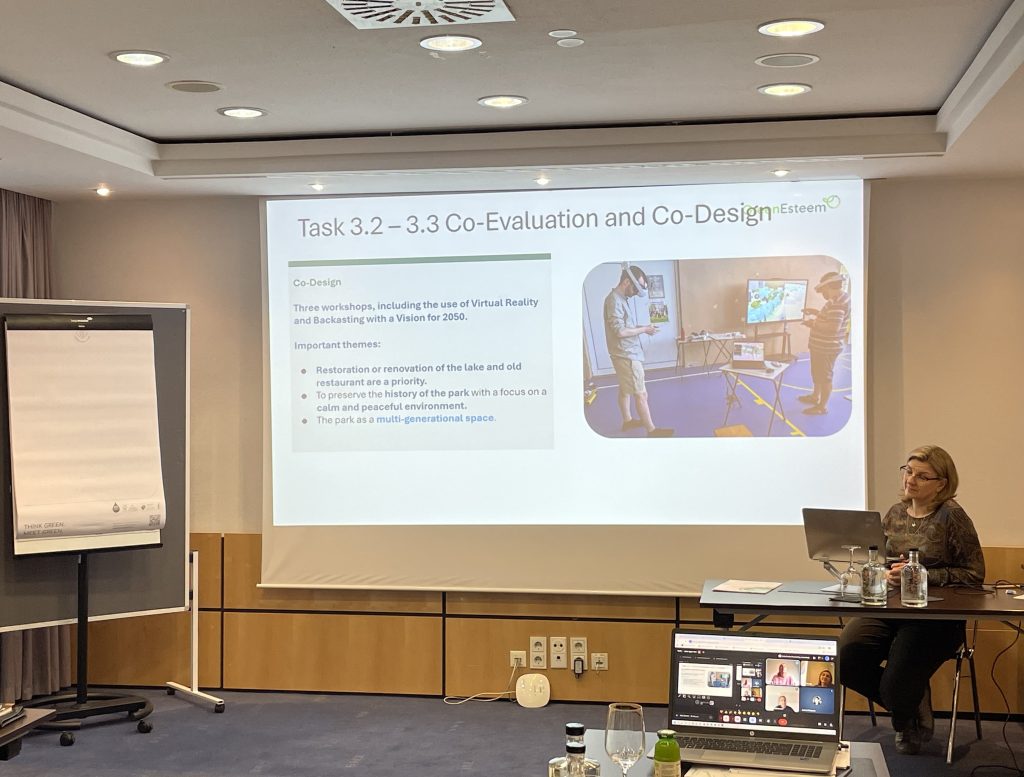
- Activating the Living Labs: The project will move directly into participatory action in Konin and Sofia. Following the upcoming Co-Creation workshops, the team will publish the Co-Creation Report in Month 15. This groundwork will culminate in the hands-on implementation of place-making pilot projects, resulting in finalized Action Plans and the Pilots Report.
- Capacity Building and Training: To equip Quadruple Helix stakeholders with the skills needed for collaborative knowledge valorisation, GreenEsteem will roll out a comprehensive training framework. Following targeted training modules, the official Training Report will be released in Month 18. The project will also host national expert roundtables in Month 21 to validate findings and forge long-term cooperative networks.
- Platform Launch & Policy Impact: To scale its impact across Europe, the project will launch an open-access GreenEsteem Platform (with digital toolkits and handbooks), the Strategic Roadmap, and Policy Briefs for local, national, and EU decision-makers.
- Final Symposium: To conclude the project’s two-year journey, partners will gather for a transdisciplinary symposium in Sofia to share key learnings with the NBS community, policymakers, and civil society.
Exploring Austrian Urban Cooling Solutions: A Walk Through Esterházypark
To conclude the two-day discussions, partners stepped outside the meeting room to experience a locally implemented Nature-Based Solution firsthand. The consortium visited Esterházypark, known as the “Cooling Park,” in Vienna’s Mariahilf 6th district. Located next to the massive concrete “Haus des Meeres” flak tower, this space was recently redesigned specifically as a research and pilot project for urban cooling, offering the GreenEsteem team valuable, tangible inspiration for their own ongoing initiatives. To combat urban heat islands, the park features a 30-square-meter, shaded “Coolspot” equipped with Raintime mist showers, “climate trees,” and a high-pressure nozzle system that uses evaporative cooling to lower ambient temperatures by up to 6 degrees Celsius. This integration of misting technology and greenery serves as another prime example of how cities can adapt to climate change, directly aligning with the core work being advanced across GreenEsteem’s pilot cases.
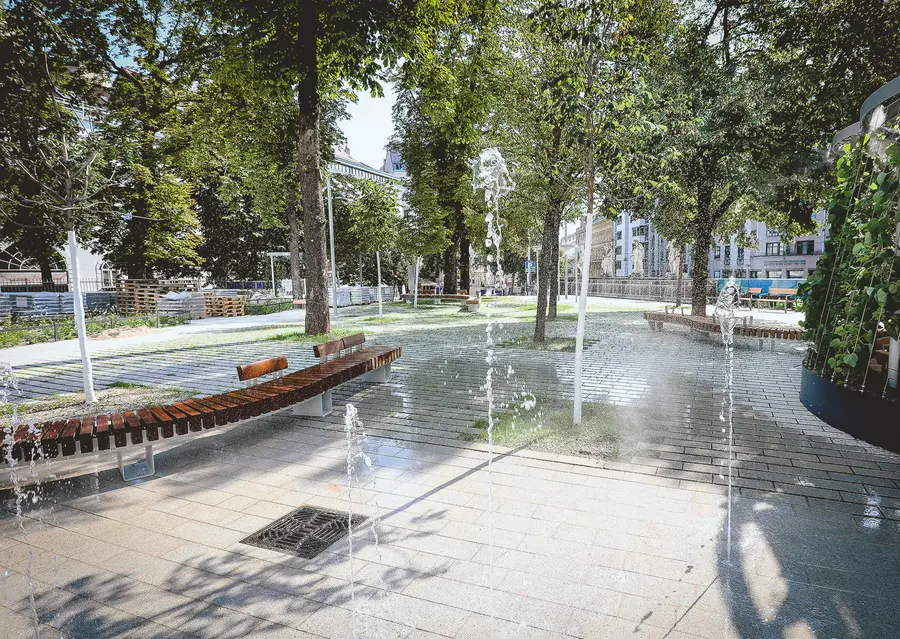
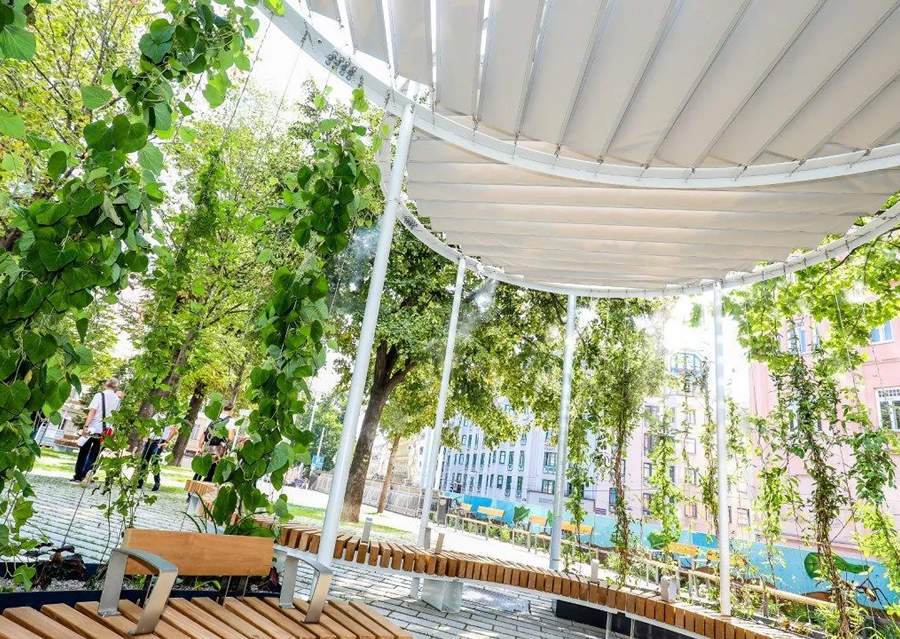
As Vienna’s first “Cooling Park,” Esterházypark was equipped with permeable paved surfaces alongside shading and water features to provide relief in summertime. (Photo: KOM/Fürthne, Christian Fürthner / Stadt Wien)
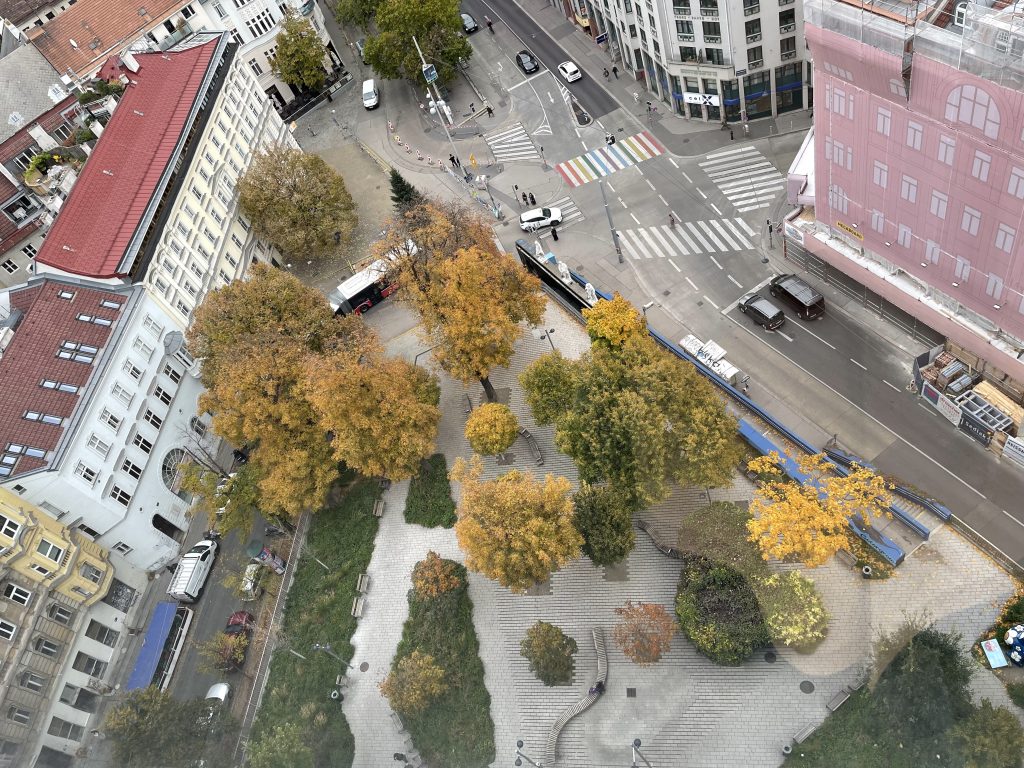
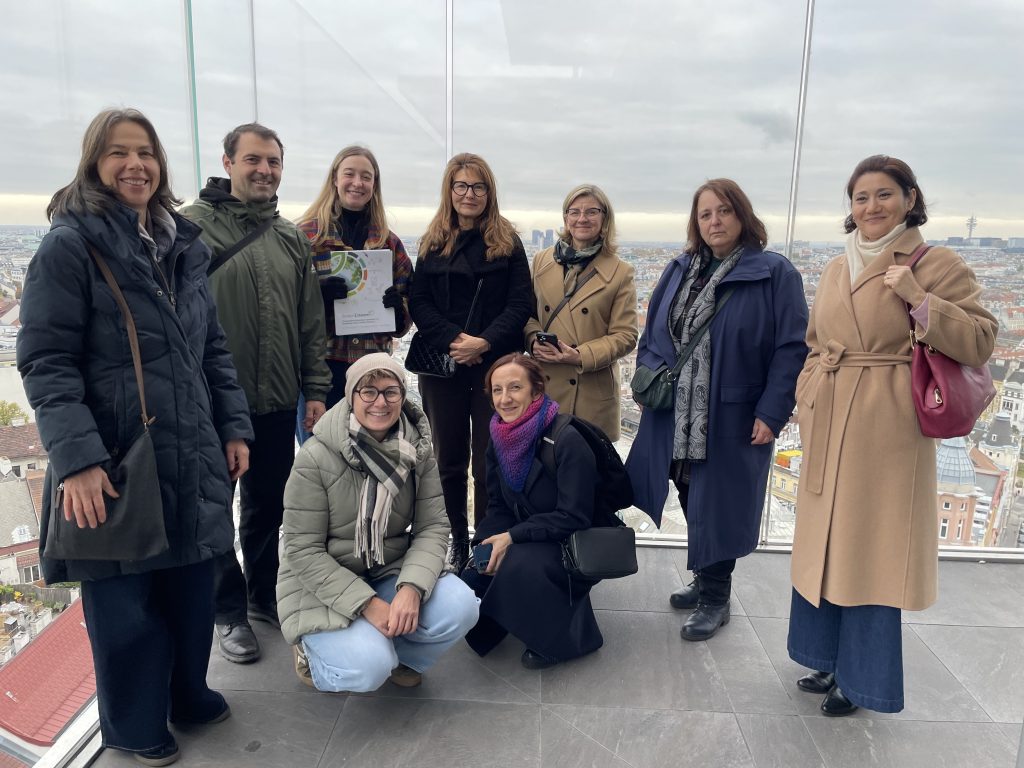
A panoramic view of Esterházypark, known as the “Cooling Park,” from the rooftop terrace of Haus des Meeres, showcasing its green spaces, tree-lined pathways, and surrounding urban landscape. The aerial perspective highlights the park’s role as a refreshing green oasis in the heart of Vienna, where trees and landscaped areas provide shade, help reduce urban heat, and create a pleasant environment for residents and visitors.
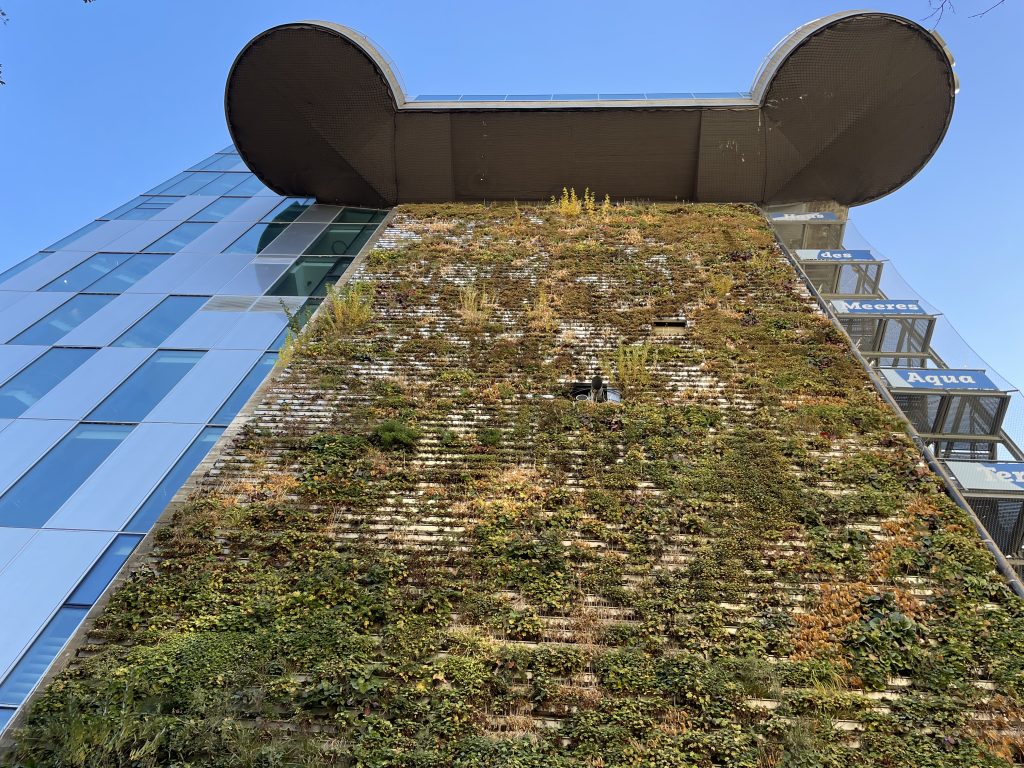
Adding to this localized climate adaptation, the Haus Des Meeres – Aqua Terra Zoo itself features one of Austria’s highest vertical green walls, where approximately 8,500 plants across 400 square meters of the former flak tower actively help cool and improve the district’s air.